The wall looks untouched. Somewhere behind it, a row of service penetrations has been sealed, photographed and covered. Or perhaps it was sealed and covered. The photographs are on somebody’s old phone, the labels use a numbering system nobody recognises and the drawing still shows last year’s layout.
The installation may be sound. Proving it is another matter.
When comparing Passive fire protection providers, look closely at the evidence that will remain after the team leaves. Hidden safety work needs a memory, because plasterboard is very good at keeping secrets.
1. Give every repair an address
“Above ceiling” is not a useful location in a building with four floors and several hundred tiles. Neither is “plant room”, if the site has six of them.
Agree a naming system before work starts. Building, floor, room and a unique reference normally give the repair somewhere permanent to live. The same reference should appear on photographs, drawings, schedules and any site label.
This sounds like dull admin. It becomes rather exciting when somebody needs to find one repair during an audit.
2. Take the photograph before the board goes back
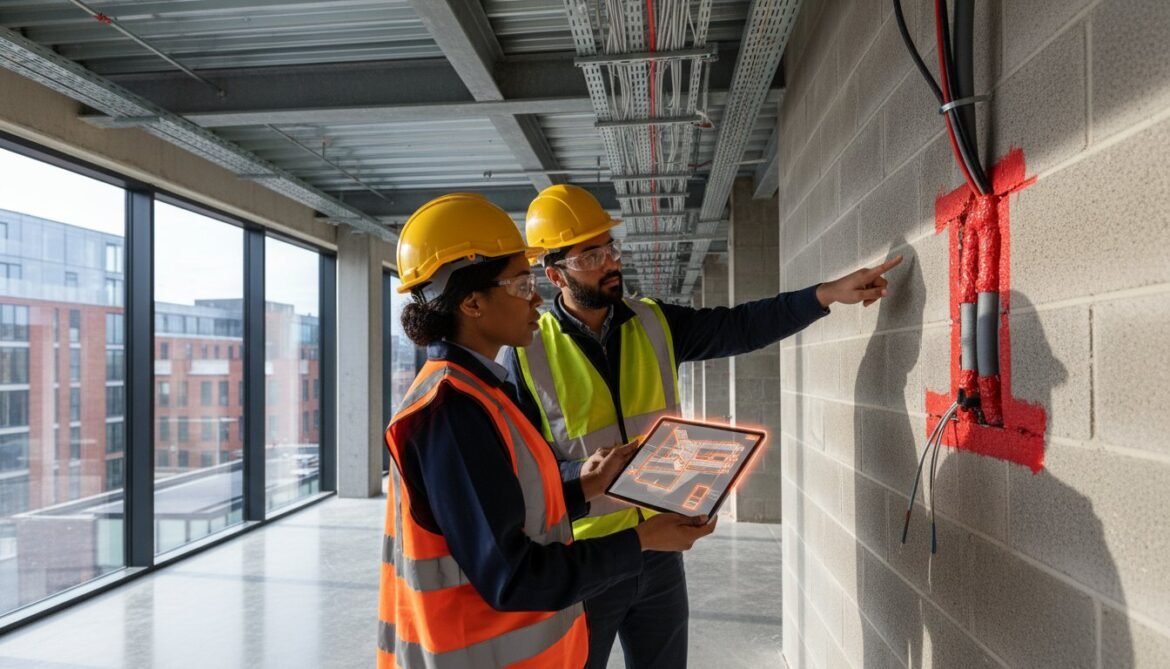
A good image shows more than a patch of red material. It needs enough context to identify the opening, plus a clear view of the finished installation. Product labels and measuring scales may be needed depending on the record and system.
Blurry close ups help nobody. Nor does a photograph taken after the ceiling has been closed, unless the purpose is to prove the ceiling exists.
Set the evidence standard in advance. Where will files be stored? Who checks them, and what happens if an image is missing? Finding out on handover day is rather late.
3. Record the surprise, not only the repair
Buildings rarely open exactly as expected. A wall may contain extra cables, an old fire stop may be damaged or the supposed compartment line may not match the drawing.
Keep the discovery with the final record. A before image and a short note explain why the installed system differs from the original assumption. If a designer, fire engineer or responsible person approved a change, retain that decision as well.
Otherwise, the next person sees the finished work but none of the reasoning. That is how sensible site decisions turn into mysterious paperwork gaps.
4. Make later alterations part of the process
Today’s perfect penetration seal can become next month’s cable route. Somebody needs one more connection and the shortest route runs through today’s finished seal.
Put it bluntly in the permit and the site induction: this is a protected opening. Break the seal and the repair, photograph and updated record become part of the job.
After alteration, inspect the area again and update the record. Old evidence describing a repair that no longer exists is worse than untidy; it creates false confidence.
5. Hand over something people can actually use
A folder containing hundreds of badly named photographs is technically full of information. Finding anything in it may still require half a day and strong coffee.
Test the handover. Can a facilities manager locate the record for one door or penetration in five minutes? Can they see outstanding defects, completed repairs and items awaiting access? Does the drawing agree with the schedule?
No? Sort the information while the project team still remembers it.
BSML’s FIRAS-accredited work covers surveys, fire stopping, penetration seals, doors, cavity barriers, compartmentation and damper remedials. Its teams support sites in London, the Home Counties and farther across the UK.
The paperwork should follow the building
Teams change. Contractors change. Rooms change use and cables multiply when nobody is watching. All of that history needs somewhere durable to live.
Keep one current, searchable record, with every entry tied to a real location. Repair completed? Add the evidence. If the protection changes again, reopen that record rather than quietly creating a second version.
Back at the untouched wall, nobody should need the installer’s old phone to prove what sits behind it. A location, tested system, clear images and a traceable sign off should tell the story. The best hidden work is not merely completed. It can still be understood years later.