Ending employment is a point where process matters. A rushed conversation or incomplete calculation can create confusion for the employee and extra risk for the business. Before a final meeting takes place, the employer should understand why the employment is ending, which rules apply and what practical steps must follow.
The first question is the basis for the decision. Resignation, redundancy, performance-related dismissal and serious misconduct are different situations and should not be treated as interchangeable. The documents, consultation steps, notice requirements and payments may vary. Employers should check the employee’s contract, any applicable award or enterprise agreement, workplace policies and current Fair Work requirements before acting.
Fair process is particularly important when the employer is making the decision to dismiss. Depending on the circumstances, the employee may need to understand the concerns, have a reasonable opportunity to respond and be told what decision has been made. A termination checklist for employers should therefore begin well before the last meeting, with records of relevant discussions, warnings or consultation where these are applicable.
Notice is another area that needs specific checking. Fair Work Ombudsman guidance explains that many employees are entitled to written notice of their last day and a minimum notice period under the National Employment Standards, or payment instead of working that notice. Exceptions apply, including in some cases of serious misconduct and for certain categories of employees.
Final pay should be calculated before the employee leaves where possible. It can include outstanding wages, accrued annual leave and other amounts that apply in the particular case, such as payment in lieu of notice or redundancy pay. Timing rules can come from an award, enterprise agreement, the National Employment Standards or other applicable law. Payroll should have enough verified information to avoid guessing at the final calculation.
The meeting itself should be planned with care. Decide who will attend, what will be communicated and how the employee will receive written confirmation. The message should be clear and respectful rather than prolonged by unnecessary debate. Managers should also think about practical matters such as personal belongings, access to systems and whether the employee needs a private way to leave the workplace.
A termination checklist for employers should include information security without treating every departing employee as a threat. Access to email, shared drives, customer systems, building passes and company devices should be changed or recovered at the appropriate time. The sequence matters, especially where the person is working a notice period or needs system access to complete a handover.
Handover arrangements depend on the role. Customer contacts, open projects, passwords held through approved company systems, delegated authorities and upcoming deadlines may need to move to another person. Sensitive information should be transferred through secure business processes rather than copied into informal notes.
The remaining team also needs communication. They usually need to know that the employee has left, how work will be covered and who now owns key responsibilities. They do not need confidential details about the reasons for the departure. A short, factual message protects privacy and keeps the focus on continuity.
After employment ends, records should be completed and stored appropriately. The business may also need to respond to later requests for employment information or clarify final payments. Keeping the relevant documents together makes those tasks easier.
The employer should also decide how company property will be returned. Laptops, phones, keys, credit cards, tools, uniforms and records may all need a handback process. Where equipment is remote, collection or shipping arrangements can be agreed in advance.
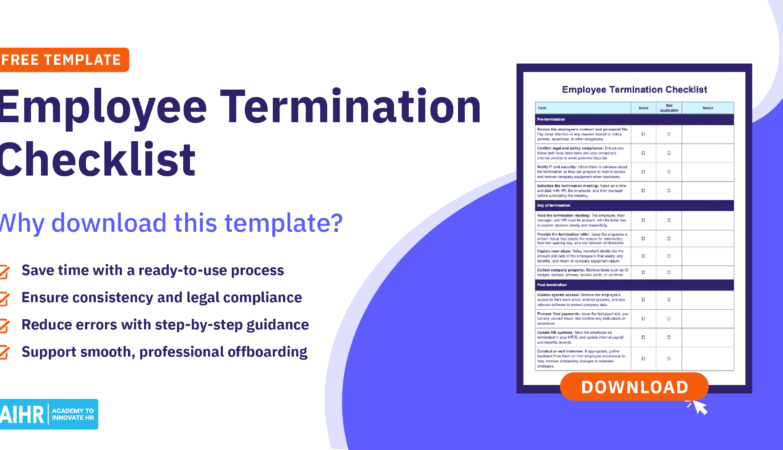
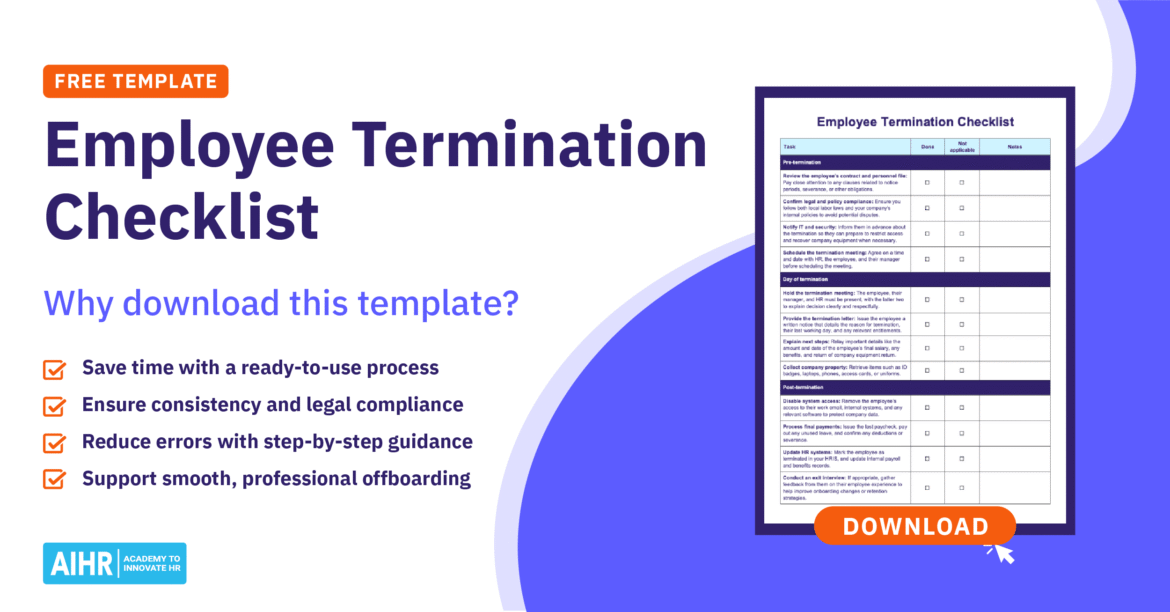
A useful termination checklist for employers is not a substitute for legal or workplace relations advice. It is a control that prompts the business to check process, notice, pay, access, handover and communication in a consistent order. When the facts are complex or disputed, professional advice should be obtained before the employment is ended.