
The final rites after cremation hold deep
importance in Hindu traditions, and the immersion of the departed person’s
ashes is one of the significant ceremonies performed by families. Asthi Visarjan in Kashi involves taking
the collected ashes and bone remains to the sacred Ganga and completing a
series of traditional prayers and rituals before immersion.
From preparing the asthi and performing Asthi
Puja to sankalp, offerings, mantras, and the final immersion, each stage
follows a meaningful sequence. Knowing how the ceremony works can help families
make suitable arrangements with greater understanding and devotion.
What Is Asthi Visarjan?
Asthi Visarjan refers to the respectful
immersion of asthi, meaning the remaining bones and ashes collected after
cremation, into a sacred river or other spiritually significant water body. It
is traditionally performed after the funeral and last rites. The remains are
generally collected in a container and carried to a selected pilgrimage
destination.
It is considered an important stage of
completing final rites through prayer and remembrance. Customs can vary
according to family traditions, regional practices, and religious beliefs, so
families may seek guidance from a knowledgeable priest before arranging the
ceremony.
Why Is Varanasi Chosen?
Varanasi, also known as Kashi, has an important
place in Hindu religious tradition. The city is associated with pilgrimage,
spiritual practices, cremation rites, ancestral ceremonies, and the sacred
Ganga. Families from different parts of India travel to Varanasi to perform
final rites beside the river.
The choice of Varanasi may be connected with
faith, family tradition, or the spiritual importance associated with the city.
Before arranging the ceremony, families can discuss customary requirements with
the priest and understand the sequence of rituals.
Preparing for the Ceremony
After cremation, the family collects and
preserves the ashes and bone fragments in a suitable container. Before
travelling, it is useful to confirm the ceremony date, meeting point, ritual
requirements, priest arrangements, and any additional services.
At the ghat, the priest guides the family
through the ceremony. Traditional materials may include flowers, milk, rice,
turmeric, camphor, ghee, incense, and sesame. Having these arrangements
prepared in advance allows family members to concentrate on prayers and
remembrance instead of managing every requirement during the ceremony.
Step 1: Arrival at the Ghat
The ceremony begins at a suitable Ganga ghat.
The family meets the priest, prepares the asthi, and receives guidance
regarding the ritual sequence.
The main puja is performed at the ghat before
the family proceeds towards the river. A boat may be used to reach an
appropriate location for the final immersion. Families should allow enough time
for the entire process and avoid scheduling other commitments too closely around
the ceremony.
Step 2: Asthi Puja
Asthi Puja is performed before the immersion.
The priest prepares the ritual setting and conducts prayers and offerings
associated with the collected remains. Traditional materials may be used
according to the selected ceremony and family customs.
This stage provides an opportunity for family
members to participate respectfully. The priest explains the required actions
and guides participants through each part of the puja. Maintaining a calm and
devotional atmosphere can help family members remain focused on remembrance and
prayer.
Step 3: Sankalp and Mantras
Sankalp is a formal declaration of intention
that forms part of many Hindu rituals. During this stage, the priest may state
details concerning the departed person and the family performing the ceremony.
The name and gotra of the deceased may be included according to the family’s
tradition.
Mantras and prayers are recited during the
ceremony. Family members can follow the priest’s instructions and participate
where appropriate. This part of the ritual connects the ceremony with the
family’s intention to honour and remember the departed person.
Step 4: Offerings and Purification
The ceremony can include different offerings and
purification practices. Depending on the selected arrangement, materials such
as flowers, rice, milk, turmeric, ghee, camphor, incense, and sesame may be
used.
The priest coordinates these activities and
explains when family members should participate. Following an organised
sequence is important because several ritual elements may take place before the
actual immersion.
These practices also provide family members with
time for prayer and reflection. The exact procedure can differ according to
religious customs, priestly guidance, and the type of ceremony selected.
Step 5: Immersion in the Ganga
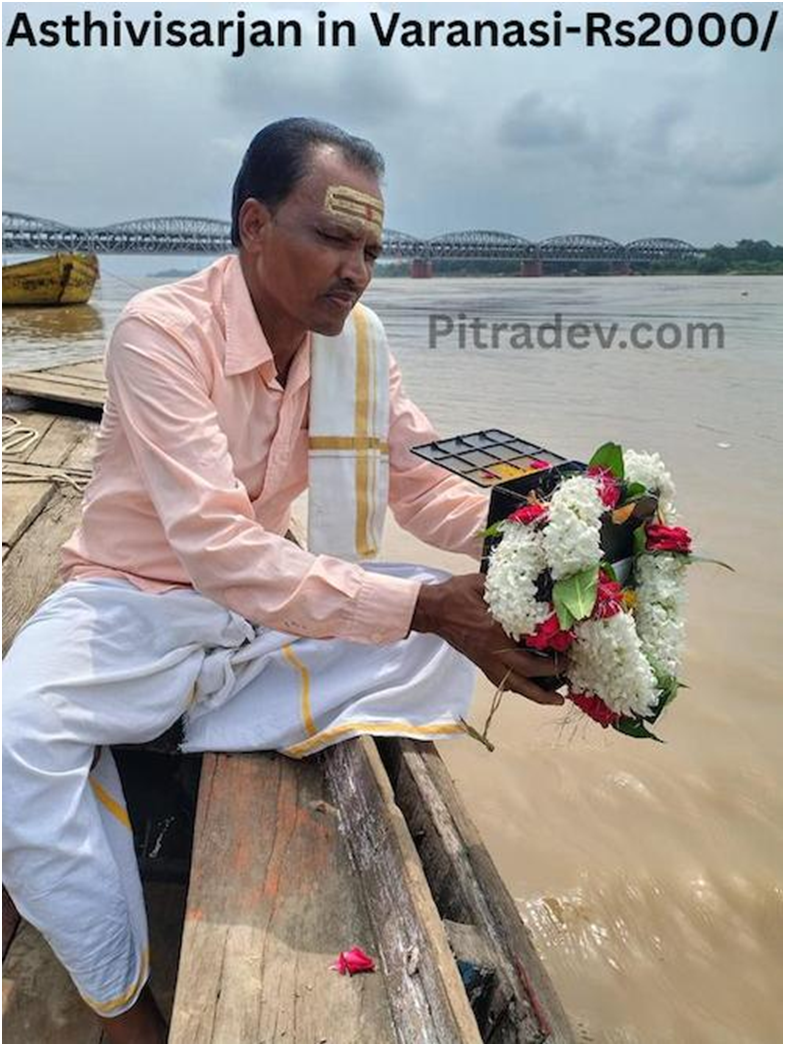
After completing the puja and prayers,
participants proceed towards the river. A boat can take the family to a
suitable location in the Ganga where the immersion is performed.
The asthi is respectfully immersed in the sacred
water while prayers are offered. The boat then returns to the ghat after the
central ritual has been completed.
Immersion is an important physical part of the
ceremony, but it follows preparation, purification, prayers, and offerings.
Families should follow the priest’s instructions and observe appropriate safety
measures while participating near the river.
Can Pind Daan Be Included?
Some families choose to perform Pind Daan along
with Asthi Visarjan. Pind Daan involves traditional offerings known as pind,
which are generally prepared using rice and other ritual materials. Families
may select this additional ceremony according to their customs and
requirements. When planning the rituals, families may also consider the Asthi
Visarjan online cost in Varanasi based on the services and arrangements
included.
An Asthisanchay Pind Daan arrangement can
include the preparation of three rice pinds as part of the ritual. Families
researching different ceremony options may also compare the cost of Pind Daan in Kashi before choosing
an arrangement. Understanding the inclusions can help families identify the
rituals, materials, priest arrangements, and other services covered.
Conclusion
Performing Asthi Visarjan in Kashi is a
final rite involving remembrance, prayer, rituals, and immersion in the sacred
Ganga. From Asthi Puja and sankalp to the final immersion, each stage holds
importance. For families unable to travel, online arrangements can support the
ritual with guidance. Understanding the process, preparing materials, and
consulting a priest helps families complete the ceremony respectfully and
peacefully.
With trusted guidance and organised support for
traditional Hindu rituals, Pitradev helps families arrange Hindu religious and
Vedic ceremonies at important pilgrimage destinations. Its services include
Asthi Visarjan, online Asthi Visarjan, Pind Daan, Narayan Bali Puja,
Grihapravesh, Vastu rituals, special pujas, and priest services. The platform
also coordinates puja materials, boat arrangements, priests, and pilgrimage
packages, helping families organise traditional ceremonies with greater
convenience and guidance.