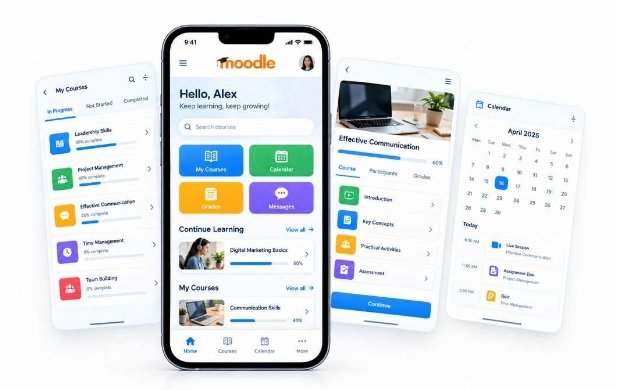
Learning is currently taking place during lunch hours, while traveling, and in time intervals between two activities. The learners desire that the study resources should be suitable for them in such a way that they do not have to make much effort to accommodate them. Moodle mobile app development allows this by providing lessons, and other learning activities on the mobile phone.
- Understanding Learners Before Building the App: The development of an effective learning application begins with identifying its target audience. There are various categories of users such as schoolchildren, college students, working individuals, and those preparing for exams. While some may require smaller classes, there are others who prefer reading a lot and performing practical tasks. These details would assist in developing a useful and understandable application.
- Development of Learning Paths Based on Personal Objectives: The concept of personalized learning offers a specific path to reach a particular goal for every individual. With the aid of the Moodle mobile application, courses can be organized in terms of topics, lessons, tests, and exercises. The learners will be able to proceed in a specific order and look at all their completed lessons.
- Making Moodle Mobile App Customization Useful: With the Moodle mobile app customization, developers can create the learning environment in such a way that it suits particular learner types. For instance, schools might have course sections based on particular subjects while companies might have training programmes based on the roles that learners perform. There is a need for custom screens, effective notifications, appropriate activity structures, and appropriate course categories.
- Creating Short Lessons for Busy Learners: It is evident that the current-day learners learn in short spurts of time whenever such time arises. Such learning in small sessions makes sure that the learner understands the concept before moving on to the next lesson. In such a scenario, the developers will be able to develop the mobile learning courses in bite-sized chunks in the form of videos, reading, testing, and exercises.
- Using Progress Data for Learning Purposes: Data about progress makes learners aware of the process of learning. Data on completion of the course, test scores, activity data, and learning analytics enable the learners to be aware of what subjects they have learned until now. This data may prove beneficial for the instructor in helping the learners realize what they must learn and what changes are needed in the course content.
- Improving Interactivity of Mobile Learning: Features such as interactivity will allow the students to participate in their assignments. This includes assignments, quizzes, discussion forums, polls, and learning modules which will inspire the students to apply the knowledge learned in practical scenarios as opposed to studying it. Push notifications will keep them up-to-date with their assignments as well as any changes in course content. All this will only mean that the app will benefit the students.
- Supporting Learning Across Devices: Students may also shift from using a phone to a tablet and computer during the entire process of taking the course. The more efficient the design of the Moodle mobile application is, the easier it will be for the students to get to their courses on any device they prefer. The issues of text readability, navigability, usability, and proper sizing of the media should also be considered.
In conclusion, the personalized mobile learning system combines all components such as relevant information, flexible learning techniques, evaluation of progress, and interactivity in one convenient system. The process of Moodle mobile development is intended to turn the process of achievement of learning goals into a learning experience that will suit different styles and routines. Mobile learning can become a part of the self-improvement process with careful planning.